
Health insurance premiums continue to rise, and many Californians are looking for ways to lower their monthly costs while still protecting themselves from unexpected medical bills. One option worth considering is a Health Savings Account (HSA)-compatible health plan.
Fortunately, HSAs continue to offer one of the most powerful tax advantages available to consumers today. The IRS has released the 2027 HSA and High Deductible Health Plan (HDHP) limits, giving individuals and families even greater opportunities to save money on taxes while preparing for future healthcare expenses.
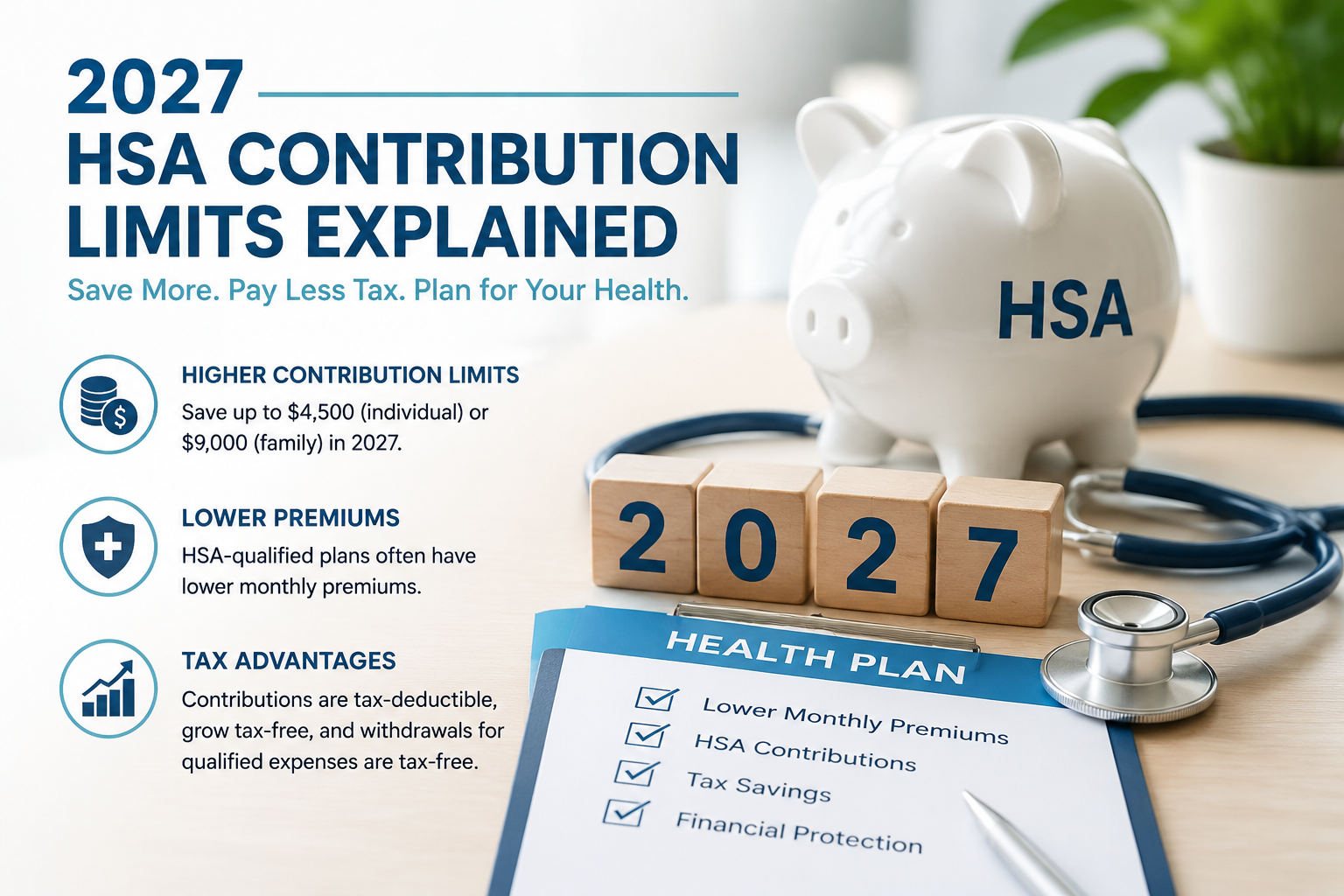
What Is an HSA?
A Health Savings Account (HSA) is a tax-advantaged savings account available to individuals enrolled in a qualified High Deductible Health Plan (HDHP).
An HSA offers three powerful tax benefits:
- Contributions are tax-deductible.
- Growth is tax-free.
- Withdrawals for qualified medical expenses are tax-free.
Unlike a Flexible Spending Account (FSA), unused HSA funds roll over year after year and remain yours forever.
In other words, an HSA can function as both a healthcare spending account and a long-term savings vehicle.
2027 HSA Contribution Limits
For 2027, the IRS increased the maximum contribution amounts, along with the annual change from 2026:
| Coverage Type | 2027 Limit | 2026 Limit | Increase |
|---|---|---|---|
| Individual | $4,500 | $4,400 | +$100 |
| Family | $9,000 | $8,750 | +$250 |
| Age 55+ Catch-Up | $1,000 | $1,000 | $0 |
As a result, individuals and families can set aside even more pre-tax dollars to help offset future medical expenses while reducing their taxable income.
2027 HDHP Requirements
To qualify for an HSA, your health plan must meet IRS High Deductible Health Plan requirements.
Minimum Deductibles
| Coverage Type | 2027 Minimum Deductible | 2026 Minimum Deductible | Increase |
|---|---|---|---|
| Individual | $1,750 | $1,700 | +$50 |
| Family | $3,500 | $3,400 | +$100 |
Maximum Out-of-Pocket Costs
| Coverage Type | 2027 Maximum | 2026 Maximum | Increase |
|---|---|---|---|
| Individual | $8,700 | $8,500 | +$200 |
| Family | $17,400 | $17,000 | +$400 |
While these increases may appear modest, they reflect the continued rise in healthcare costs across the country. Therefore, consumers should review both their premium savings and potential financial exposure before selecting a plan.
ACA Out-of-Pocket Maximums
| Coverage Type | 2027 Maximum | 2026 Maximum | Increase |
|---|---|---|---|
| Individual | $12,000 | $10,600 | +$1,400 |
| Family | $24,000 | $21,200 | +$2,800 |
Notably, the ACA’s maximum out-of-pocket limits increased substantially for 2027. This means that consumers enrolled in non-grandfathered health plans may face significantly higher financial responsibility before their plans begin paying 100% of covered expenses.
Why HSA Plans Are Becoming More Popular
Many consumers choose Bronze plans or HSA-qualified HDHPs because they offer lower monthly premiums. The money saved on premiums can often be redirected into an HSA, creating a healthcare emergency fund while providing valuable tax savings.
For example: A family that contributes the full $9,000 to an HSA may reduce its taxable income by that amount. Depending on their tax bracket, this could result in significant federal and state tax savings while building a reserve for future healthcare expenses.
Understanding the Real Risk
Lower premiums are attractive, but it’s important to understand your financial exposure.
For 2027, ACA-compliant health plans may have out-of-pocket maximums as high as:
- $12,000 for an individual
- $24,000 for a family
This represents a substantial increase from 2026 and highlights the importance of planning ahead for unexpected medical expenses.
Who Should Consider an HSA Plan?
An HSA-qualified plan may be a good fit if:
- You are generally healthy.
- You want lower monthly premiums.
- You are looking for additional tax deductions.
- You want to build long-term healthcare savings.
- You are self-employed or own a small business.
- You want more control over your healthcare spending.
Consider Supplemental Protection
While HSA plans can be an excellent financial tool, many individuals are surprised by how quickly deductibles and out-of-pocket costs can add up after a hospitalization, accident, cancer diagnosis, or critical illness.
For that reason, many consumers pair an HSA-qualified plan with supplemental coverage such as:
- Accident insurance
- Hospital indemnity insurance
- Critical illness insurance
- Cancer insurance
These plans can help offset large deductibles and unexpected healthcare costs while allowing you to keep the lower premium of a Bronze or HSA-compatible health plan.
The Bottom Line
The 2027 HSA limits provide an even greater opportunity to save for healthcare expenses while reducing taxable income. With contribution limits increasing to $4,500 for individuals and $9,000 for families, HSAs remain one of the most tax-efficient financial tools available.
However, choosing the right health plan involves more than comparing premiums. It’s important to consider deductibles, out-of-pocket exposure, available tax advantages, and whether supplemental coverage may help protect your finances.
If you’d like help comparing HSA-qualified plans, Bronze plans, PPOs, HMOs, or supplemental coverage options, Solid Health Insurance Services can help you find a plan that fits both your healthcare needs and your budget. You may call 310-909-6135 or email us at info@solidhealthinsurance.com You may also run a personalized quote here.